Medically reviewed by Dr. Bismah Irfan, MD, board-certified in internal medicine and nephrology. Published November 10, 2026.
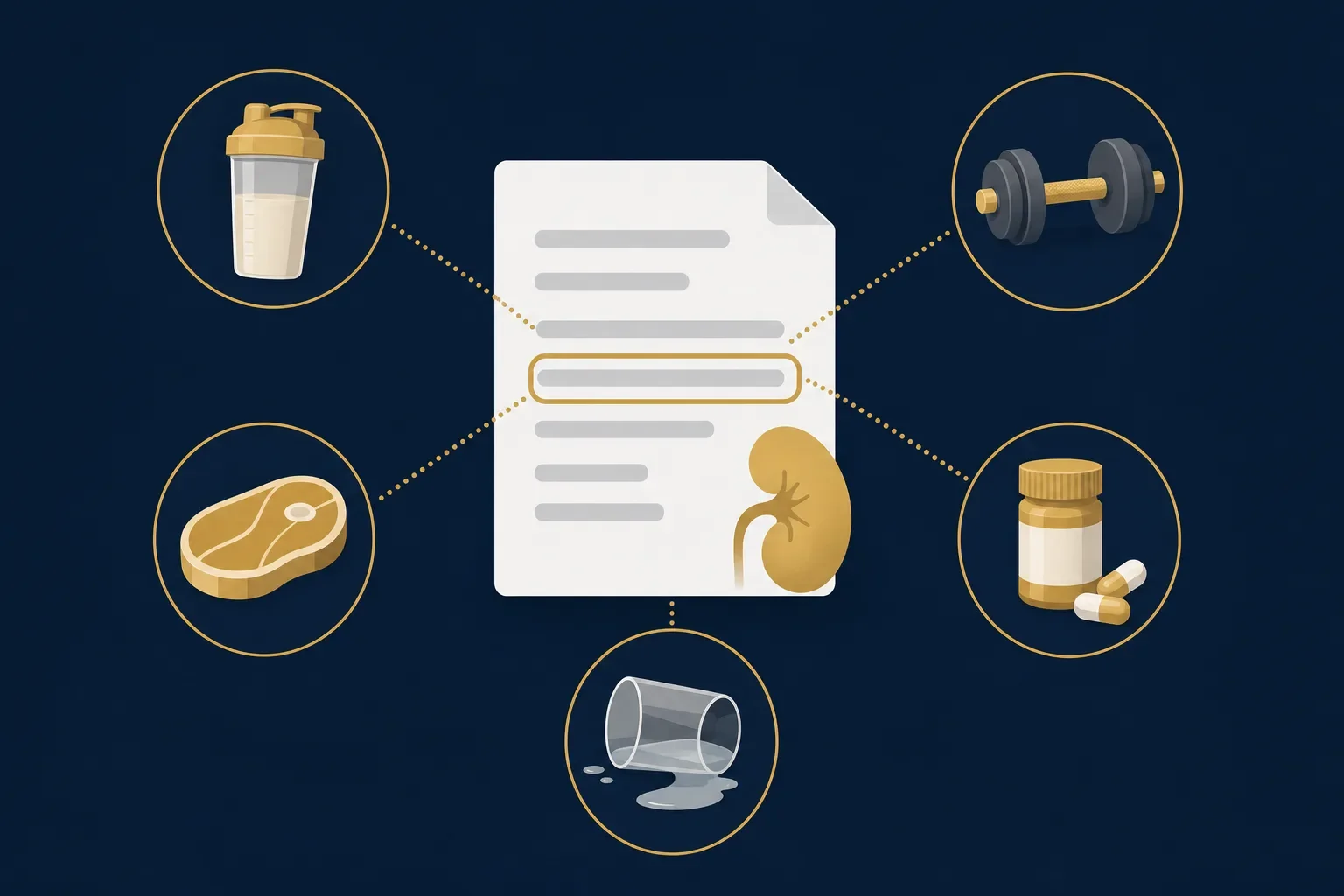
Quick answer: your eGFR is not measured directly. The lab calculates it from your blood creatinine, your age and your sex. So anything that pushes creatinine around, like a steak the night before, a hard workout, a creatine scoop, a day without enough water or a few common medicines, can move your eGFR while your kidneys stay exactly the same. Real improvement does happen when a reversible strain is removed, such as regular anti-inflammatory painkillers or dehydration. Scarred tissue does not grow back, though, so for most of my patients the goal is a steady trend, and one prettier number matters much less.
Know your last eGFR or creatinine? Bring it to the 2-minute check.
"Doctor, my creatinine went up. Does this mean I'm heading to dialysis?"
I hear some version of that question almost every week, usually from someone who has been refreshing a lab portal late at night. What I tell them is what I told the people in my creatinine class: a rising creatinine is a signal, not a sentence. Sometimes the signal is real and we need to act on it. Sometimes it is the lab version of burnt toast setting off the smoke alarm. Either way, you check the whole house before you decide there is a fire, and that is what this article is for.
1. First, check whether the number is even real
Creatinine is a waste product of muscle. Your muscles use a compound called creatine for quick energy, a small share of it breaks down every day into creatinine, and healthy kidneys filter that creatinine out into your urine. When filtering slows, creatinine builds up in the blood. That is the whole reason we use it as a kidney test.
The catch is that blood creatinine also rises when your body simply makes more of it, or when your kidneys secrete less of it into the urine. Neither of those means you lost any filtering. Before I believe a worrying result, I go through this list:
- Cooked meat or fish before the blood draw. In one study, a single cooked-meat meal raised median creatinine from 80.5 to 101 µmol/L within one to two hours and dropped median eGFR from 84 to 59.5 (Preiss, 2007). The KDIGO 2024 guideline says waiting at least 12 hours after meat or fish gives the cleanest reading.
- Creatine supplements and very high-protein diets. More creatine in the muscle means more creatinine produced every day. This one causes so much needless panic that I gave it its own article: is creatine bad for your kidneys.
- A hard workout in the day or two before. Heavy lifting, a long run, a CrossFit session. KDIGO lists extreme activity among the things to rule out when eGFR changes suddenly.
- Muscle mass itself. A bodybuilder can carry a "high" creatinine with perfectly good kidneys, while a frail 80-year-old can show a "normal" creatinine and be filtering poorly.
- Medicines that block creatinine secretion. Some drugs, trimethoprim (in Bactrim and Septra) being the most common, make the kidney push less creatinine into the urine, so the blood level rises while true filtration stays the same (Delanaye, 2011). I go through the full list in drugs that fool creatinine levels. Please don't stop a prescription to fix a lab value; tell the person ordering the test what you take.
- Not enough water. This one is a little different. Dehydration really does lower filtering for a while, which is why it shows up in the blood. In most people it comes back once fluids are replaced.
- The lab and the formula. I have had patients draw blood at Quest and at Labcorp on the same day and get eGFRs about five points apart. Same blood, different calibration. Both labs now report eGFR with the race-free CKD-EPI 2021 equation, so if your older results came from the previous formula, part of the jump between them may be arithmetic.
One of my patients went from a creatinine of 1.0 to 1.6 after a week of fasting, and during that week she was also drinking far less water than usual. She was sure her kidneys were failing. We repeated the test five days later, after proper fluids and rest, and she was back at her usual 1.1.
How to retest so the number means something
If a result surprised you, a clean repeat is usually the first step:
- Morning draw, no meat or fish for at least 12 hours before. Some offices ask for 24.
- No hard workout the day before.
- Drink normally in the days before. Gulping a liter in the parking lot doesn't help.
- If you take creatine, stop it for at least four weeks before the recheck, and say so on the form.
- Use the same lab as last time when you can.
- Bring a full list of your medicines and supplements, including the ones you think don't count.
When to ask for cystatin C
Cystatin C is a small protein that almost every cell in your body makes at a steady rate. Muscle, meat and creatine barely touch it. KDIGO 2024 recommends using the combined creatinine and cystatin C equation (eGFRcr-cys) when the creatinine-based number is likely to be off and the result will change a decision. That includes very muscular or very frail people, vegetarians, people on high-protein diets or creatine, and people with amputations or long illnesses.
In my own practice I usually run both side by side, because a big gap between them tells me something. I once had a man whose creatinine-based eGFR was in the low 90s while his cystatin C-based eGFR was 54. His diet was excellent, which kept his creatinine low and made the usual number look reassuring. If you want the longer version, read my piece on cystatin C vs creatinine, or start with the basics in what glomerular filtration rate is.
2. When a drop in eGFR is part of the treatment
This surprises a lot of people: some of the best kidney-protecting medicines lower eGFR a little at the start, and that dip is expected.
SGLT2 inhibitors such as dapagliflozin (Farxiga) and empagliflozin (Jardiance), and blood pressure medicines in the ACE inhibitor and ARB families (lisinopril, losartan and others), lower the pressure inside the tiny filters of the kidney. Filtering under lower pressure shows up as a small drop in eGFR in the first weeks. Over years, that lower pressure is what protects the filters.
KDIGO 2024 is clear on both points. The small, reversible eGFR drop after starting an SGLT2 inhibitor is generally not a reason to stop it. With an ACE inhibitor or ARB, creatinine and potassium should be rechecked within two to four weeks of starting or raising the dose, and the medicine is usually continued unless creatinine rises by more than 30% in that window.
So, practically: a small dip after one of these medicines is expected. A rise of more than 30%, or feeling dizzy, unusually weak or short of breath, is a reason to call your prescriber the same week. Either way, don't stop the medicine on your own.
GLP-1 medicines like semaglutide work differently. There is no planned dip, but the first weeks can bring nausea, vomiting or diarrhea, and fluid loss from those is the main reason the FDA label warns about acute kidney injury. If you can't keep fluids down on a GLP-1, call. I explain the bigger kidney picture for these drugs in my Ozempic article.
3. What genuinely moves eGFR
I like to say that medicines are your seat belt. You absolutely need them, and you still have to drive carefully. The things below are how you drive:
- Taking away what strains the kidneys. Regular ibuprofen or naproxen is the classic one, and there are others on many people's lists (medications that can hurt your kidneys). When I sit down with a new patient, I ask them to name their top three kidney stressors that week. For many people one of them is in the medicine cabinet.
- Recovering from an acute hit. After a bad stomach bug, a serious infection or a hospital stay, eGFR can climb back over weeks to months. This is where the biggest real rises happen. More on that in acute kidney injury recovery time.
- Blood pressure. KDIGO suggests a top number below 120 for adults with CKD when it's tolerated. Home readings tell me far more than one office reading. See how blood pressure affects your kidneys.
- Blood sugar, if you have diabetes (managing diabetes with CKD).
- Bringing down protein in the urine, which usually takes a combination of medicines, blood pressure control and diet.
- Correcting metabolic acidosis, when your blood bicarbonate runs low (what metabolic acidosis is).
- Moving every day and sleeping enough. KDIGO encourages people with CKD to stay active and avoid long sedentary stretches. Pick one habit, settle into it, then add the next.
Now the honest part about scale. What I see most often is stabilization. Sometimes eGFR climbs a few points, and occasionally more when a big reversible strain comes off. Scarred kidney cells don't come back to life. What we can do is take load off the cells that are struggling but still alive, so they can work as well as they are able. Every kidney has its own ceiling, and nobody can promise you where yours is.
It also helps to know that GFR drifts down slowly with age, even in healthy people (Denic, 2016). Holding the same number for several years is a real result.
4. What I look at besides creatinine
When a patient brings me one creatinine value, the first thing I ask for is the last three. Creatinine is like a speedometer: useful, but it won't tell you whether the engine is healthy or a tire is going flat. You need the whole dashboard.
Here is what I check:
- The trend. At least three eGFR results over several months. Creatinine naturally varies around 5% from draw to draw even in stable people (Waikar, 2018). KDIGO 2024 says a change of more than 20% on the next test goes beyond normal variation and deserves a closer look.
- Urine albumin-to-creatinine ratio (UACR). It picks up leaking protein, often well before creatinine moves. Under 30 mg/g is normal, 30 to 300 is moderately increased, over 300 is severely increased. I have watched creatinine sit perfectly still for years while UACR quietly climbed. A doubling of UACR on a repeat test is worth a conversation.
- Cystatin C, as above.
- A home blood pressure log, two weeks of morning and evening readings.
- A1c, bicarbonate, potassium, phosphorus and uric acid.
- High-sensitivity CRP, for low-grade inflammation that never shows up as a fever.
- BUN-to-creatinine ratio, which helps me tell a fluid problem apart from a problem inside the kidney.
- Every medicine and supplement you take, including the ones from a friend or another country.
5. Food and protein
Protein is where I see the most confusion. Too much keeps the filters working overtime, while too little in an older or frail person costs muscle you will want later.
For adults with CKD stage 3 to 5, KDIGO suggests about 0.8 grams of protein per kilogram of body weight a day, and avoiding more than 1.3 g/kg if your kidneys are at risk of getting worse. For someone who weighs 154 pounds (70 kg), that is roughly 56 grams a day. I lean my patients toward plant protein from whole foods: beans, lentils, tofu, tempeh, nuts. KDIGO likewise advises eating more plant foods than animal foods and fewer ultra-processed ones. Plant protein from powders doesn't count as whole food. I'd rather you get the fiber that comes with the beans.
There is a side effect worth knowing. Eating less red meat lowers your creatinine a little on its own, because cooked meat adds creatinine to the blood. So part of a lower number on a plant-forward diet is the true load coming down, and part is the measurement changing. Cystatin C helps tell the two apart.
Potassium and phosphorus are different. Many people with CKD restrict them out of fear and give up the very fruits and vegetables that help. KDIGO advises limiting high-potassium foods mainly if you have had high potassium or are at risk of it, and tailoring the rest to your labs with a dietitian. More here: low-potassium protein choices, phosphorus and CKD, the protein paradox and a breakfast that works for CKD.
6. "Creatinine-lowering" remedies: be careful
Search "how to lower creatinine fast" and you will find teas, cleanses and capsules promising results in days. Some of these only change the number. Others can hurt the kidney you are trying to protect.
- High-dose vitamin C can deposit oxalate crystals in kidney tissue, something KDIGO specifically warns about. I go through the vitamins I most often take off people's lists in vitamins to avoid with kidney disease.
- Herbal products and "detox" blends. Some herbs are directly toxic to the kidney (aristolochic acid is the best-known example, Gökmen, 2012), some teas carry a lot of potassium, and contamination is a real problem. When researchers bought Ayurvedic medicines online, about one in five contained lead, mercury or arsenic (Saper, 2008). If you take anything, choose third-party tested products and tell your kidney doctor.
- Kidney cleanses. I explain why I'm wary of them in why your kidney cleanse might be destroying your kidneys.
- Hibiscus tea. Short answer in the questions below, the long one in hibiscus tea for kidney health.
A useful question before any supplement: why am I taking this, and what will tell me it's working? If you can't answer both, bring it to your next visit before you buy the next bottle.
7. What your number means
| eGFR (mL/min/1.73 m²) | Stage | What it means |
|---|---|---|
| 90 or above | G1 | Normal filtering. Counts as CKD only if there are other signs of kidney damage, like protein in the urine |
| 60–89 | G2 | Mildly decreased. Same rule as G1 |
| 45–59 | G3a | Mildly to moderately decreased |
| 30–44 | G3b | Moderately to severely decreased |
| 15–29 | G4 | Severely decreased (see stage 4 CKD) |
| below 15 | G5 | Kidney failure |
Source: KDIGO 2024.
Two things to remember about this table. First, one number doesn't make a diagnosis. CKD means the abnormal result has lasted at least three months. An eGFR of 53 on a single test after a hard week is a reason to repeat it.
Second, the speed of change matters as much as the stage. A drop of more than 20% from one test to the next, or a fall into a lower stage, is worth a prompt appointment. An eGFR of 45, 50 or 60 that has held steady for two years is a very different story from one that was 70 last spring.
8. When to call a doctor right away
Don't wait for your next routine visit if you notice any of these:
- Much less urine than usual, or none
- New swelling in your legs, ankles, feet or face
- Shortness of breath
- Confusion, unusual drowsiness or a change in mental state
- Vomiting or diarrhea that keeps you from holding down fluids, especially if you take blood pressure pills, diuretics, an SGLT2 inhibitor or a GLP-1
- A creatinine that jumped by 0.3 mg/dL or more within two days, or rose by half within a week (this is how acute kidney injury is defined)
- A potassium result flagged high, especially with palpitations or muscle weakness
9. Questions I hear all the time
Can drinking water lower creatinine?
If you were dehydrated, yes, often within days. Beyond that, extra water doesn't improve filtering: in a year-long trial in stage 3 CKD, coaching people to drink more did not slow eGFR decline (CKD WIT, 2018). Follow any fluid limit your doctor has given you.
What creatinine level is alarming?
There isn't one number for everyone; your lab report lists its own range. What worries me more is a fast change from your own baseline: up 0.3 mg/dL within 48 hours, or 50% within a week.
Can eGFR go back up?
Sometimes: after an acute injury, after dehydration is corrected or after a straining medicine is stopped. In long-standing CKD I most often see stabilization.
Does hibiscus tea lower creatinine?
I'm not aware of good human evidence that it does. It may modestly lower blood pressure, and it contains potassium, so check with your doctor if you have advanced CKD.
10. Bring your last three results
If you have read this far, you probably have a lab report open in another tab. Good. One creatinine tells me very little. Three eGFR results, your urine albumin and a list of what you take tell me a lot.
Our short intake form asks for your most recent eGFR or creatinine so the team can prepare before anyone talks to you. See if you qualify for our kidney program. If you would rather start by learning where you stand, the kidney health quiz takes a few minutes.
This article is general education, not personal medical advice. Please don't start, stop or change any medicine without talking to the doctor who prescribed it.