
Introduction: A New Frontier in Kidney Healing
Chronic Kidney Disease (CKD) affects nearly 1 in 7 adults in the United States, and yet, our treatment toolbox has barely changed in decades. While medications can slow progression and dialysis can replace filtration, the medical field has long lacked an approach that helps the kidneys actually repair themselves.
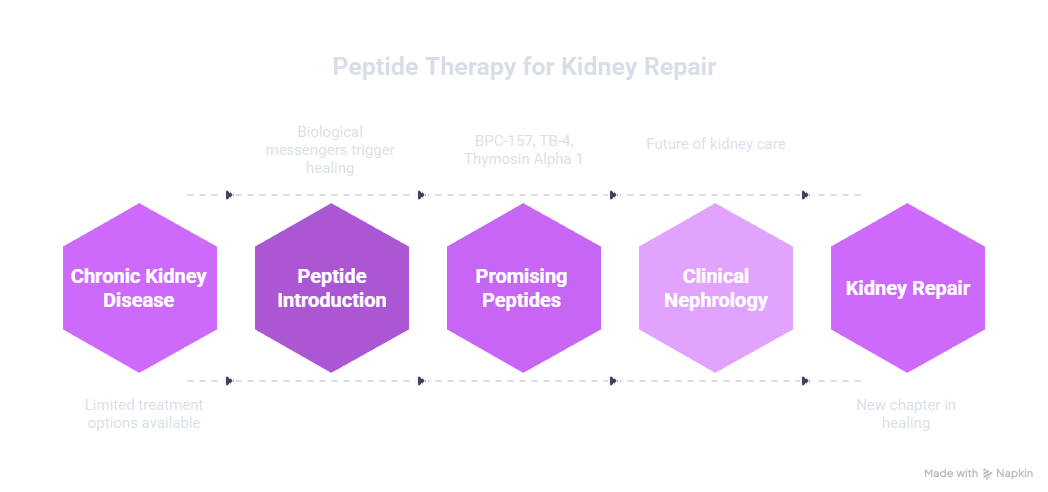
But what if the future of kidney care lies in something already inside your body – tiny chains of amino acids known as peptides?
In this groundbreaking episode of Wellness Focused, Dr. Bismah Irfan, MD, Houston’s leading nephrologist and Functional Medicine physician, unpacks the emerging science of peptide therapy and its potential to transform how we approach CKD. As part of her comprehensive approach, she emphasizes regular kidney function testing to accurately track progress and healing.
Peptides act as biological messengers, triggering healing, regeneration, immune modulation, and inflammation reduction at the cellular level. For the kidneys, organs that struggle to repair once damaged, this is a paradigm shift.
Today, we’ll explore:
- What peptides are and why they matter
- The most promising peptides for kidney repair
- The science behind BPC-157, Thymosin Beta-4, and Thymosin Alpha 1
- The future of peptide therapy in clinical nephrology
- How to safely access these cutting-edge therapies
If you or someone you love has kidney disease, this could be the beginning of a new chapter in healing.
What Are Peptides? The Body’s Natural Healing Signals
Peptides are short chains of amino acids, smaller than proteins but mighty in function. Your body uses thousands of peptides as signaling molecules that:
- Regulate inflammation
- Stimulate tissue repair
- Activate immune pathways
- Support vascular health
- Trigger cellular regeneration
Think of peptides as text messages sent between cells, telling them exactly what to do and when.
Because peptides occur naturally in the body, peptide therapy works with your physiology, not against it. This is especially meaningful for chronic kidney disease, where inflammation, immune dysfunction, and tissue damage drive long-term decline. Accurate lab monitoring can play a crucial role in evaluating how peptides are affecting renal markers.
Why Peptides Matter for Chronic Kidney Disease
CKD is complex. It’s not simply the kidneys "slowing down", it’s a multifaceted process involving:
- Chronic inflammation
- Fibrosis (scar tissue replacing healthy kidney cells)
- Vascular damage
- Autoimmune triggers
- Oxidative stress
- Reduced regenerative capacity
Until now, the primary goal of treatment has been preservation, not restoration.
But peptides introduce a potential new outcome:
regeneration of damaged kidney tissue.
Here’s why they’re promising:
✔ Peptides target inflammation directly
✔ They support tissue repair and remodeling
✔ They influence immunity
✔ They work at the cellular level
To measure these improvements, kidney function tests provide essential data on inflammation, filtration rate, and markers of kidney stress.
The Most Promising Peptides for Kidney Repair
Not all peptides affect the kidneys, but a handful show particular promise:
- BPC-157 → Tissue repair, anti-fibrosis, vascular healing
- Thymosin Beta-4 (TB4) → Regeneration, angiogenesis, cellular recovery
- Thymosin Alpha 1 (TA1) → Immune modulation, anti-inflammatory effects
Let's break down how each works.
BPC-157: The Tissue-Healing Powerhouse
What It Is
BPC-157 (Body Protection Compound-157) is derived from a gastric protein and is known for its remarkable regenerative and anti-inflammatory abilities.
Why It Matters for Kidney Disease
1. Anti-Fibrotic Properties
CKD progression is largely driven by fibrosis. Studies suggest BPC-157 may:
- Reduce fibrotic pathways
- Improve microvascular blood flow
- Support collagen balance
2. Tissue Repair & Regeneration
BPC-157 enhances:
- Angiogenesis
- Cellular migration to damaged areas
- Tissue remodeling
3. Systemic Anti-Inflammatory Effects
Because CKD is a state of chronic inflammation, BPC-157’s ability to down-regulate inflammatory cytokines may help slow progression.
Potential Applications in CKD
- Diabetic kidney disease
- Hypertensive nephrosclerosis
- Ischemic kidney injury
- Drug-induced kidney toxicity
- Early and moderate CKD with fibrosis
Thymosin Beta-4 (TB4): The Regeneration Peptide
What It Is
Thymosin Beta-4 is a naturally occurring peptide found in virtually every tissue. It is central to injury response and cellular repair.
Key Benefits for Kidney Health
1. Supports Stem-Cell Activation
TB4 helps mobilize stem cells to sites of kidney injury.
2. Reduces Inflammation and Oxidative Stress
This directly slows CKD progression.
3. Enhances Vascular Healing
TB4 promotes angiogenesis and repairs endothelial damage.
4. Protects Against Ischemia
TB4 provides critical protective effects in low-blood-flow states.
Thymosin Alpha 1 (TA1): The Immune Modulator
What It Is
TA1 is a peptide produced naturally by the thymus gland.
Why It's Important for Kidney Disease
1. Autoimmune Regulation
Beneficial for lupus nephritis, IgA nephropathy, ANCA vasculitis, etc.
2. Infection Prevention
Strengthens immunity in CKD patients.
3. Anti-Inflammatory Benefits
Reduces damaging cytokines that worsen CKD.
Which Peptide Is Best for Kidney Repair?
There is no single "best" peptide for kidney health – the right choice depends on what you are trying to support.
- If the goal is slowing fibrosis and improving blood flow, BPC-157 is the most-discussed option for kidney repair, thanks to its anti-fibrotic and regenerative signaling.
- If the priority is tissue regeneration after injury, thymosin beta-4 (TB-4) is often favored for its role in cell migration and repair.
- If chronic inflammation or immune dysregulation is driving the disease, as in autoimmune-related CKD, thymosin alpha-1 (TA-1) works on the immune side.
In practice, a physician may combine peptides rather than pick one, matching the protocol to your labs, diagnosis, and stage of disease. That is why the "best peptide for kidney health" is less a product and more a decision – one made with someone who can read your bloodwork and adjust as you go.
A quick caution: the strongest-sounding option online is rarely the safest. The best peptide for your kidneys is the one chosen for your situation, sourced properly, and monitored over time.
Is Peptide Therapy Safe for People With Kidney Disease?
One of the most common questions patients ask is whether peptides are safe when kidney function is already reduced – and it is exactly the right question to ask. The honest answer depends on the peptide, its source, and how closely a physician is involved.
The evidence is still early
Most peptides explored for kidney support, including BPC-157 and thymosin beta-4, are not FDA-approved for treating kidney disease. Much of what we know comes from animal and laboratory research. That does not make them useless – it means they belong under supervision, not self-prescription.
Source and purity matter more here
Peptides sold online for "research use" can be impure or mislabeled. For kidneys that already filter everything in the bloodstream, medical-grade sourcing is not a luxury – it is a safety requirement.
Dosing changes when kidney function is low
Because the kidneys clear many substances, standard dosing may not apply when your eGFR is reduced. A physician adjusts for this and reviews your other CKD medications for interactions. If you have a single functioning kidney, the case for close medical oversight is even stronger.
Used thoughtfully – the right peptide, a verified source, and physician oversight – peptide therapy can fit into a broader kidney plan. Used carelessly, it adds risk to organs already under strain.
The Science Behind Peptide Therapy in CKD
Research suggests peptides may:
- Reverse certain types of fibrosis
- Improve kidney microcirculation
- Reduce proteinuria
- Support glomerular repair
- Protect against nephrotoxic injury
- Improve mitochondrial function
- Enhance antioxidant defenses
These improvements can often be measured through routine lab work tracking filtration rates, inflammation markers, and protein levels.
However, peptide therapy requires expert supervision, especially for advanced CKD or autoimmune patients.
Accessing Peptide Therapy: What Patients Need to Know
1. Work With a Physician Trained in Peptide Therapy
Dr. Irfan specializes in selecting proper peptides, monitoring labs, and creating kidney-focused protocols.
2. Use High-Quality, Medical-Grade Peptides
Purity, sterilization, and potency matter.
3. Integrate Peptides Into a Comprehensive Kidney Protocol
Nutrition, detox, gut health, blood sugar optimization, and lifestyle interventions enhance results.
Three Key Takeaways
1. The Power of Peptides
They reduce inflammation, stimulate repair, and support kidney function at a cellular level.
2. Promising Peptides for Kidney Health
BPC-157, TB4, and TA1 target core issues driving CKD.
3. Safe, Effective Access Requires Expert Guidance
This includes continuous lab monitoring for accuracy and safety.
Conclusion: The Future of Kidney Care Is Regenerative
For decades, kidney care focused only on slowing decline. Peptide therapy shifts the goal toward regeneration.
By harnessing the body’s internal healing signals, peptides may:
- Reduce inflammation
- Improve vascular health
- Reverse certain fibrosis
- Support cellular repair
- Balance immune activity
At IVitality MD in Houston, Dr. Bismah Irfan integrates peptide therapy, Functional Medicine, and advanced diagnostics to rebuild kidney health from the inside out.
Ready to Explore Peptide Therapy for CKD?
Visit www.drbismah.com to learn more or book a consultation with Dr. Irfan.
Your kidneys deserve the future of healing.
Frequently Asked Questions
Can peptides help repair the kidneys?
Peptides are the body's own signaling molecules for healing, and certain ones are being studied for their potential to reduce inflammation and support kidney tissue repair. The science is early and promising rather than proven, so it is explored as part of a supervised, root-cause approach, not a guaranteed cure.
What are peptides?
Peptides are short chains of amino acids that act as natural signals in the body, directing processes like repair, inflammation control, and cellular function. Peptide therapy uses specific ones to support those processes.
Are peptides for kidney disease FDA-approved?
Most peptides being explored for kidney repair are not FDA-approved for that use, and the evidence is still developing. Because the space is poorly regulated, they should only be considered under a qualified physician who can weigh quality, safety, and your kidney function.
Do peptides replace conventional kidney treatment?
No. They are explored as a complement to standard care, including blood pressure and blood sugar control, diet, and addressing root causes, not a replacement. Any use should be physician-guided.
Is BPC-157 good for kidney repair?
Early research, mostly animal and laboratory studies, suggests BPC-157 may support kidney repair by reducing fibrosis, improving blood flow, and encouraging new blood-vessel growth. Human data is still limited, so it is best seen as promising rather than proven – and used only under a physician's guidance.
Can you take peptides if you have only one kidney?
Possibly, but with extra caution. A single kidney does all the filtering, so peptide purity and correct dosing matter even more. This is not a decision to make from an online supplier – it needs a nephrologist who can weigh your function and adjust the plan.