Dr. Bismah Irfan, MD holds an active Texas medical license and works with Texas patients by video visit. She is a board certified nephrologist who spends the first appointment on one question most Texas patients have never been asked: what started the damage, and how much of it can still be moved.
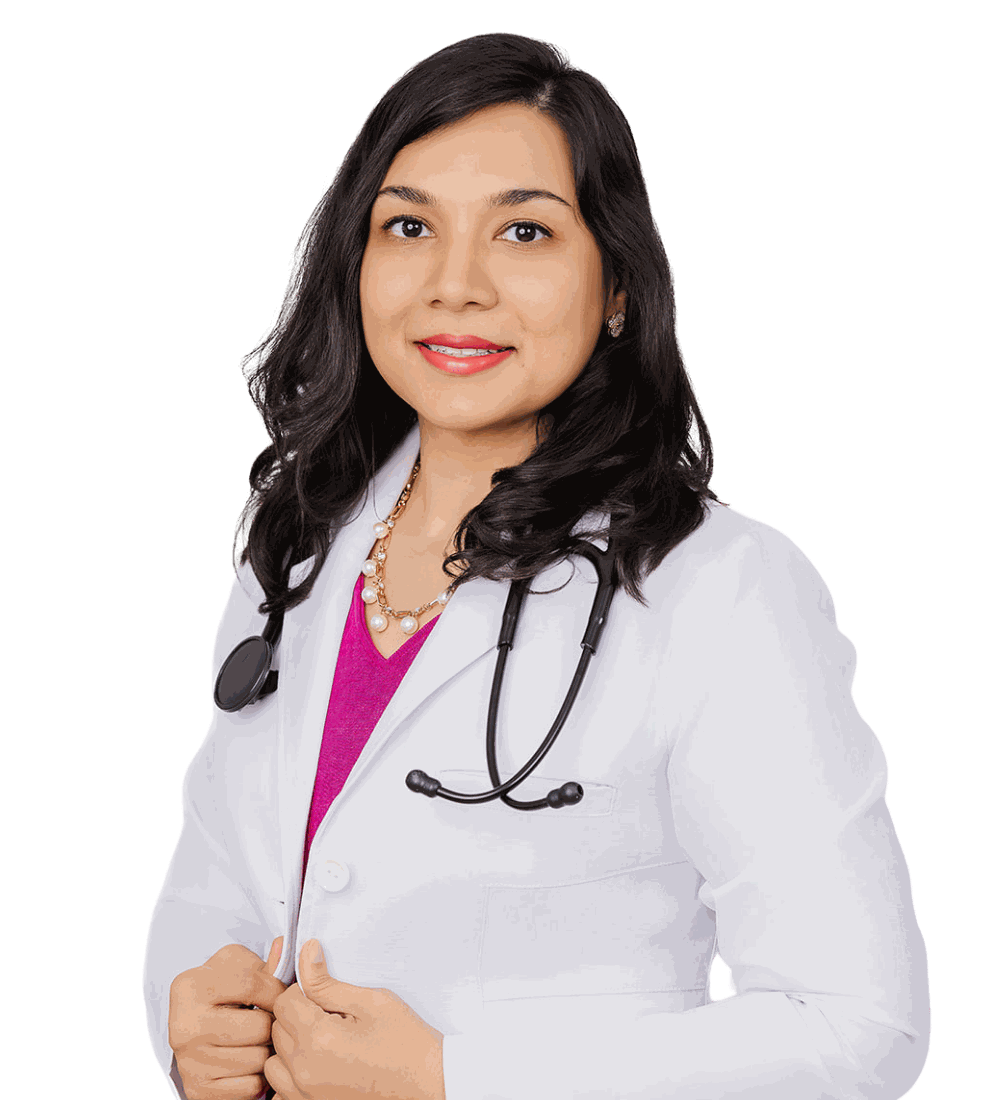
Texas is the one state where you have both options. Dr. Bismah Irfan practices from the clinic in west Houston, so patients in Houston, Katy and Sugar Land can be seen in person, and everyone from Dallas to El Paso can work with her by video visit instead of driving across the state.
Texas also carries one of the heavier type 2 diabetes burdens in the country, and diabetes is the single biggest driver of chronic kidney disease. Most Texans who come to us have been told their numbers are "a little off" for years without anyone asking why the damage started in the first place.
Patients come to us from Houston, Dallas, San Antonio, Austin, Fort Worth, El Paso and the rest of Texas.
Functional medicine gets a lot of loose claims attached to it. This is the conventional training underneath it.
Internal Medicine and Nephrology, both through the American Board of Internal Medicine, plus Lifestyle Medicine (ABLM).
Nephrology fellowship at Albert Einstein College of Medicine in New York, internal medicine residency at the University of Illinois.
Former assistant professor at Cleveland Clinic Lerner College of Medicine.
Trained through the Institute for Functional Medicine after her own rheumatoid arthritis diagnosis, and built the HEAL protocol around what she found.
Every one of these has causes underneath it. That is where the work starts.
Slowing progression and protecting the function you still have.
The most common driver of CKD, and the one where root-cause work pays off fastest.
Blood pressure damages kidneys, damaged kidneys raise blood pressure. We work on both ends.
Genetic, but the rate of progression is not fixed.
Autoimmune kidney involvement, managed alongside your rheumatology care.
What to do after an injury so it does not become chronic.
Diabetes and blood pressure drive most of the chronic kidney disease we treat, and Texas has plenty of both. If you are on several medications for them already, the question worth asking is which part of the picture is protecting your kidneys and which part is quietly taxing them.
Worth reading next: what a kidney-friendly breakfast actually looks like.
Every step below happens without you leaving Texas. The clinic runs on Central time, the same clock as most of Texas.
The qualification form asks about your stage, your history and what you have already tried, so the first conversation is not spent on paperwork.
No pressure and no diagnosis on this call. It exists so you can ask what the program involves and decide whether a full consultation makes sense. If you already know, you can skip it and book the consultation.
A 150 minute review with Dr. Bismah Irfan of your labs, imaging, medication list, diet and history. This is the appointment where you get an answer to why the damage started.
Testing that goes past the standard kidney panel: toxin load, infections, immune and metabolic markers, nutrient status. Collection is done near you or by kit at home.
A personalized plan covering nutrition, targeted supplementation, detoxification and the medical side, with scheduled follow-ups so it gets adjusted as your numbers move.
Some of what we offer has to be done in a room: EBOO, IV chelation, hyperbaric oxygen and stem cell and exosome therapy. Patients fly into Houston for a concentrated block of treatment and continue by video from home. Houston is a drive or a short hop from anywhere in the state.
See the Houston clinic page for the address, conditions treated and how a first visit is scheduled, or read what the comprehensive consult covers.
“You are a nephrologist and a functional medicine doctor, which we had been looking for. We did not find one that combines both.”
Patient, name withheld
“When I started with you, my labs were pretty bad. This year I did them again, and everything came back normal.”
Patient, name withheld
Published with names removed for privacy. Individual results vary. More patient stories.
Yes. Dr. Bismah Irfan holds an active Texas medical license and the clinic itself is in Houston, so you can choose video visits, in-person care, or a mix of both.
No, and most patients do not. Functional nephrology runs alongside conventional care. We look for the causes behind the numbers, your existing team keeps doing what it does, and nothing in your medication plan changes without your physicians in the loop.
You send your records ahead of time, then meet Dr. Bismah Irfan by secure video. Lab draws and imaging are done locally near you and the results come back to us. The only reason to travel is if you want the in-clinic therapies that have to be done in person.
Chronic kidney disease at every stage, diabetic and hypertensive kidney disease, polycystic kidney disease, lupus nephritis, proteinuria, recurrent stones and recovery after acute kidney injury. If your case is not a fit, we will tell you on the call rather than after you have paid for a program.
Late stage is harder. It is still worth doing. The goal shifts toward protecting the function you have left, taking load off the kidneys and improving how you feel day to day. What is realistic for your stage is something Dr. Bismah Irfan will tell you honestly on the consult.
Dr. Bismah Irfan, MD. She is board certified in both internal medicine and nephrology through the American Board of Internal Medicine, completed her nephrology fellowship at Albert Einstein College of Medicine and previously taught nephrology as an assistant professor at Cleveland Clinic Lerner College of Medicine.
The qualification form is short. If your case is not a fit for this kind of care, we will say so.
See if you qualify