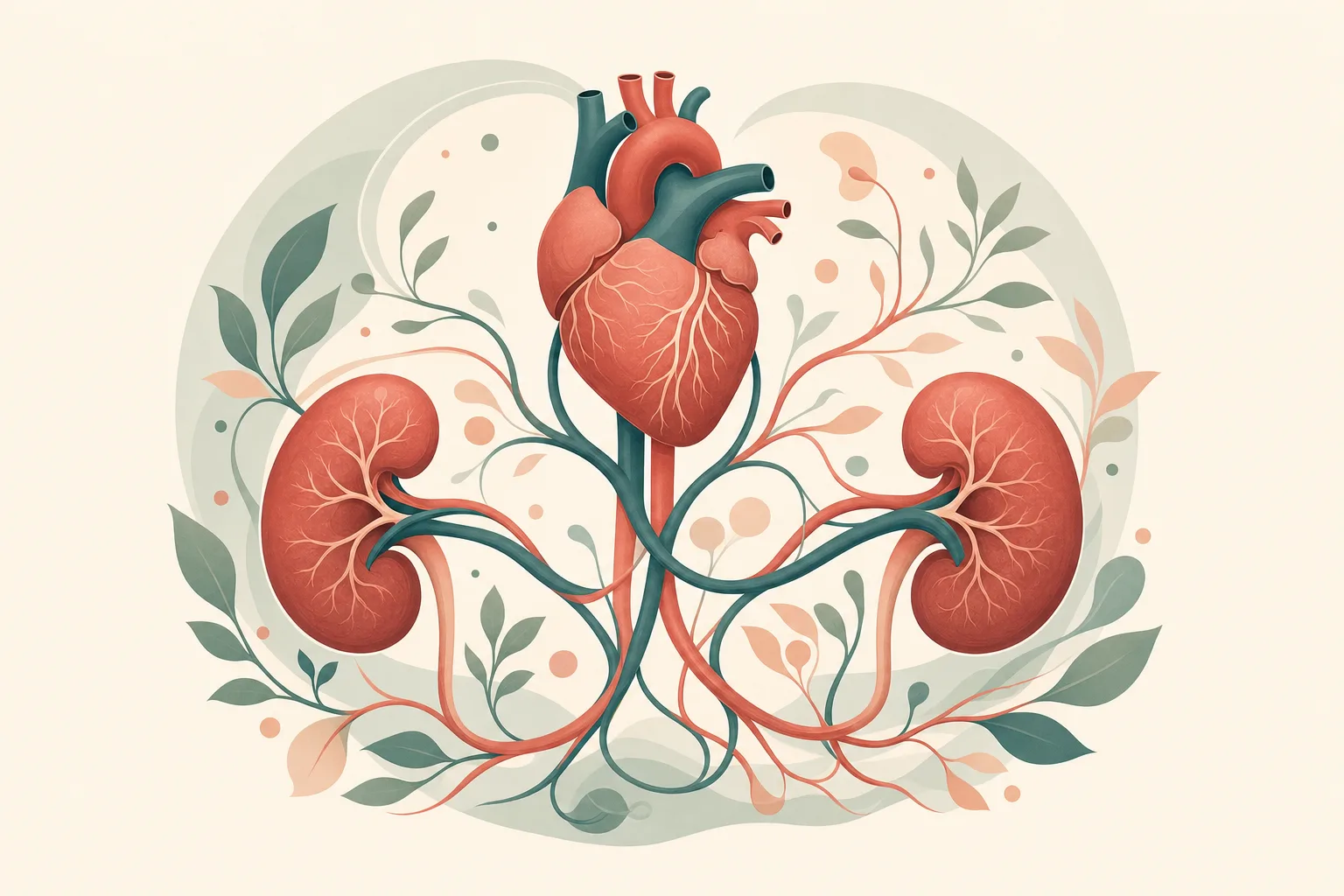
Something I read recently has stayed with me, and I keep bringing it up with patients. For decades, most of us were taught a very tidy story about heart disease: cholesterol builds up on the artery wall like grease in a pipe, the pipe narrows, and one day it clogs. It's such a clean image that it's easy to forget it's only part of the picture. When researchers look closely at how plaques actually grow and rupture, what they find is messier and, honestly, more interesting — and it has everything to do with something I see in my practice every single day.
Because the thing damaging people's arteries is rarely just one villain. And more often than not, the same forces wearing down the heart are quietly wearing down the kidneys too.
I want to be careful and honest here, because this is exactly the kind of topic where bad information spreads. Lowering LDL cholesterol still matters — it remains one of the foundations of protecting your heart, and I am not telling anyone to abandon a statin their cardiologist prescribed. What the newer science adds is a second layer: beyond cholesterol accumulating in the wall, it's injury to the vessel lining and clot formation on damaged plaque that drive how those plaques grow and how they trigger heart attacks. Retained cholesterol particles set the disease in motion; clotting and inflammation are what make it dangerous. Both are true. And once you see that fuller picture, the wall we've built between cardiology and nephrology starts to look pretty artificial.
The number that should make us pay attention
Here's what first pulled me into this. If your kidneys are failing and you're on dialysis, your risk of dying from a cardiovascular event runs roughly ten to thirty times higher than someone with healthy kidneys — and even in earlier-stage kidney disease, the risk climbs in a steady, graded way to about three to six times normal as kidney function declines. That's not a coincidence. That's a signal. Your body is telling us these two organs are bound together far more tightly than our medical specialties admit.
And yet, in conventional care, we keep them in separate rooms. You see a cardiologist for your heart and a nephrologist for your kidneys, and the two rarely sit down to ask the same question: what is the root cause damaging both? Instead, the patient ends up on five or six medications, each aimed at a symptom, while the underlying fire keeps burning.
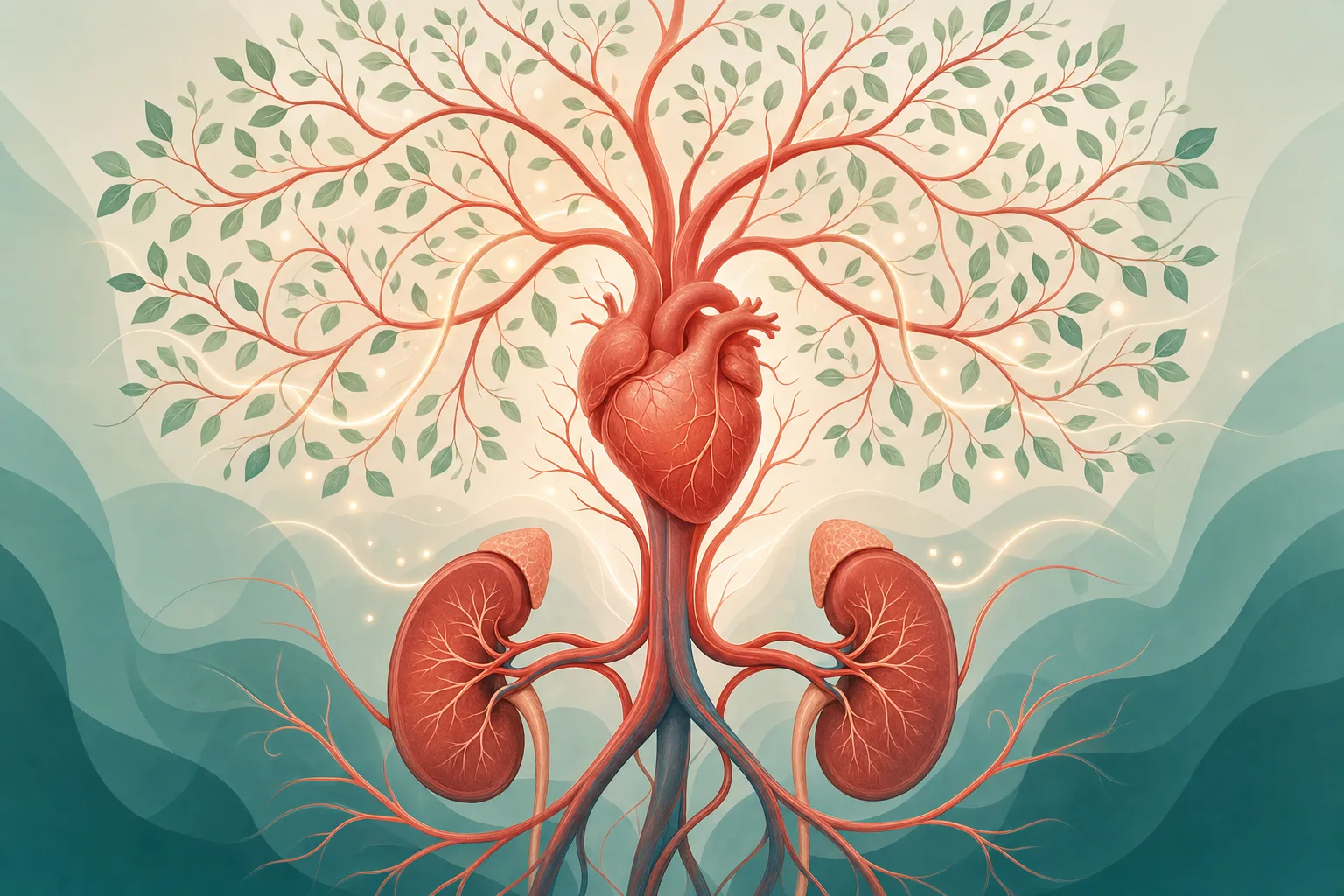
The truth I've come to is simpler. Your heart and your kidneys aren't just neighbors — they're partners. They share the same delicate blood-vessel lining, the endothelium, and they're vulnerable to the same damaging forces. When you understand those forces, you stop chasing two diseases and start treating one system.
The shared forces that damage both organs
Let me walk through what actually wears down the vascular system that feeds both your heart and your kidneys. None of these work alone; they feed each other.
The first is chronic inflammation — a low, persistent smolder inside your blood vessels. Not the healthy, acute kind you get from a sprained ankle, but a fire that never quite goes out. It comes from places most people never think to look: processed seed oils that weren't part of the human diet a century ago, low-grade infections hiding in the gums or sinuses, an overwhelmed gut leaking inflammatory signals, even the steady drip of cortisol from chronic stress. That constant inflammation damages the same vessel lining in the coronary arteries and in the microscopic filters of your kidneys.
The second is oxidative stress. Your body always makes some free radicals as a byproduct of being alive, and normally your antioxidant defenses mop them up. But when production outpaces cleanup — from a poor diet, toxin exposure, chronic stress, even overexercising without recovery — those free radicals start attacking the vessel walls directly. They oxidize cholesterol particles, making them sticky and inflammatory, and they injure the kidney's filtering units. Oxidized LDL, not just LDL, is a big part of what makes cholesterol dangerous.
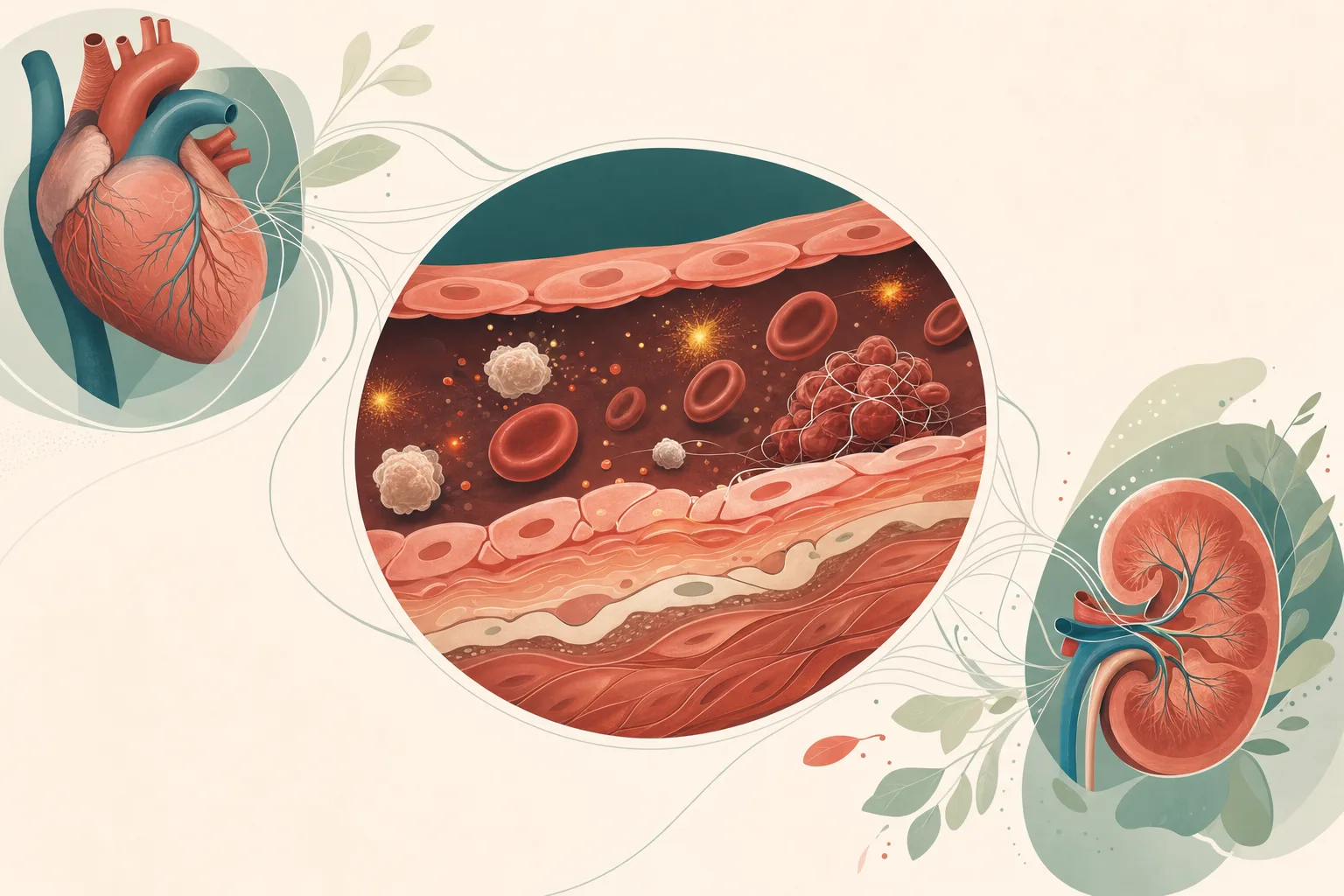
The third is endothelial dysfunction. That inner lining of your blood vessels is supposed to produce nitric oxide, which keeps the vessels relaxed, blood flowing smoothly, and clotting in check. When it's repeatedly battered by inflammation and oxidative stress, it stops doing its job. Blood pressure gets harder to control, clots form more easily, and the damage accrues in your coronary arteries and your kidneys at the same time. This loss of nitric oxide is one of the clearest shared mechanisms we have for why heart and kidney disease so often travel together.
The fourth is something conventional panels rarely measure: abnormal clotting tendencies. Some people — through genetics or conditions that raise factors like lipoprotein(a) or fibrinogen — simply clot more easily than they should. Lipoprotein(a) deserves special mention: it's largely set by your genes, it's an independent and likely causal driver of cardiovascular risk, and it tends to climb as kidney function falls. Fibrinogen, a clotting protein tied to inflammation, is more of a risk marker than a proven target — but when these factors combine with a damaged vessel lining, you get repeated small clots and repair cycles that thicken arteries and grind down the kidney's filters over time.
And the fifth force ties many of the others together: metabolic dysfunction, especially blood sugar. When blood sugar runs high — even in the "pre-diabetic" range — sugar molecules attach to proteins in your blood and vessel walls through a process called glycation, forming advanced glycation end-products, or AGEs. These make proteins stiff, inflammatory, and dysfunctional, and they injure the small vessels of the heart and kidney through the same mechanism. Pre-diabetes alone nudges cardiovascular risk up modestly — on the order of fifteen percent — and the harm grows as glucose climbs.
What this looks like in a real person
One case has stayed with me. A man in his early sixties came in with what looked like two separate problems: kidney function around 40% and falling, and two stents already placed in his coronary arteries. His cardiologist had him on a statin and considered his cholesterol "well controlled." His kidney doctor was watching the numbers drop and, in his words, waiting for dialysis. Two specialists, two sets of pills, and nobody asking the deeper question.
When we ran more complete testing, we found what the standard panels had missed. His oxidized LDL was very high — real oxidative damage to his vessels. His inflammatory markers were up. His fibrinogen was elevated. And there was evidence of chronic low-grade infection driving systemic inflammation. The cholesterol number everyone had been watching looked fine on paper, while the things actually damaging his vessels went unaddressed.
So we took a different angle — one aimed at the root causes affecting both organs. We worked on the oxidative stress, brought down the systemic inflammation, cleared the infections, and rebuilt his nutrition to support the vessel lining. No miracle pills. Just finding what was driving the damage and addressing it methodically, alongside his existing care.
I want to be clear that results vary, and this is one patient's story, not a promise. But within about six months his kidney function had improved to 52%, his energy had returned, and his blood pressure — which had needed three medications — was controlled on one. His vascular inflammation markers had normalized. We hadn't treated his heart or his kidneys in isolation. We'd treated the vascular system that serves both.
What you can take from this
You don't need advanced testing to start protecting the system that feeds both organs, though deeper testing can help target it. The forces above respond to the same unglamorous, powerful things: an anti-inflammatory diet built on whole foods, steady blood sugar, real sleep, managed stress, movement, addressing hidden infections, and not smoking. None of that replaces the medications and monitoring your doctors provide — it works underneath them, lowering the pressure on your vessels every day.
If you're living with kidney disease, ask your team to look at your heart as part of the same story, not a separate file. Ask whether anyone has measured the markers that actually reflect vascular injury — oxidized LDL, inflammatory markers, lipoprotein(a). And if you're carrying cardiovascular risk, take your kidneys just as seriously. They share a bloodstream, a vessel lining, and a fate. The most hopeful part of all this is that the root causes damaging both are, in large part, the ones we can do something about.
Every person is different, with different root causes, and this article is for education — not a substitute for personalized medical care. Please don't change any medication on your own; work with your physician to decide what's right for you.