Introduction: The Root Cause Standard Kidney Care Rarely Looks For
Most kidney appointments revolve around numbers — creatinine, GFR, protein in the urine, blood pressure. Those numbers matter. But they describe what is happening to your kidneys, not always why.
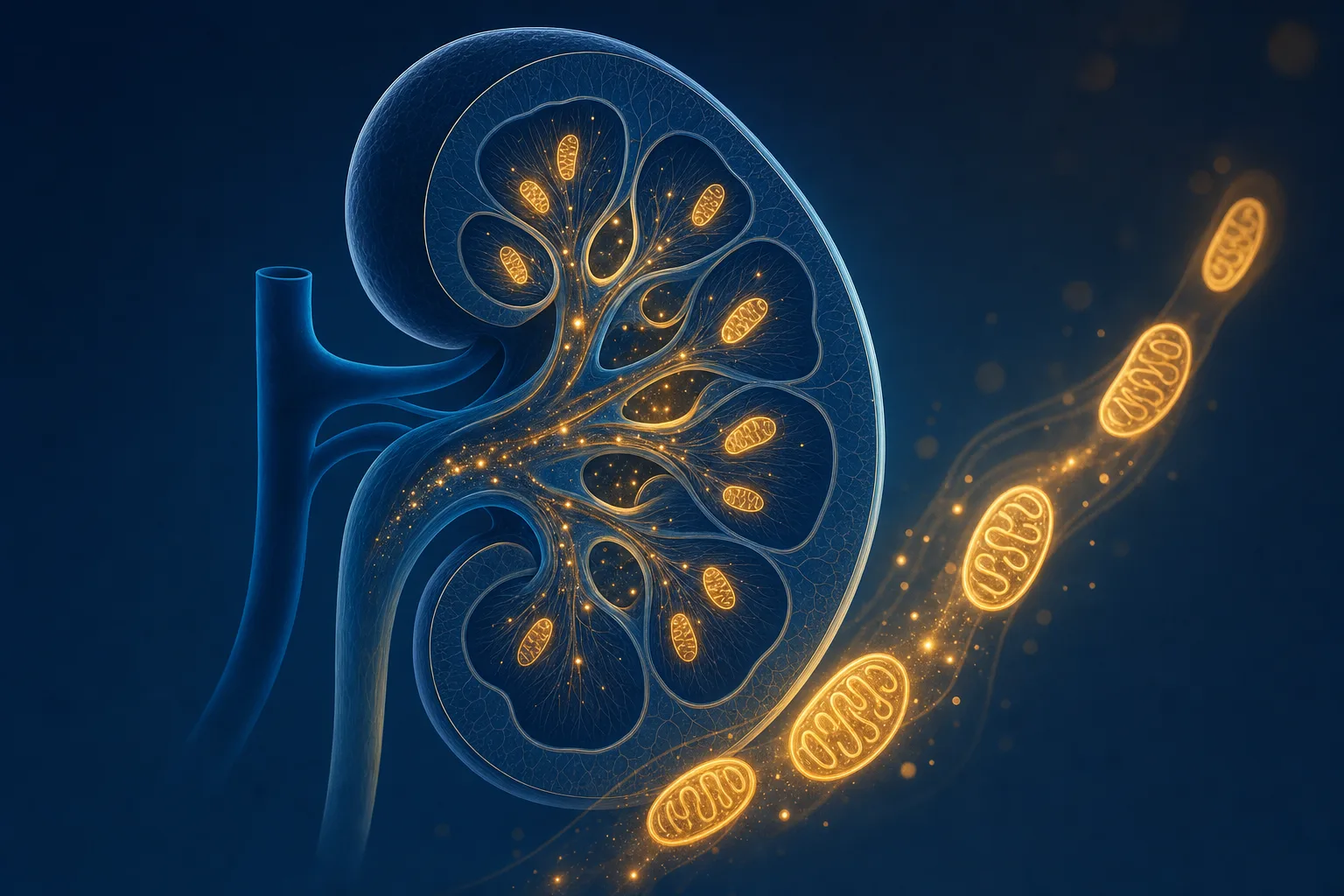
One of the explanations I keep coming back to in my practice sits at a level most lab panels never reach: the tiny energy factories inside your kidney cells, called mitochondria. When they falter, kidney function can quietly slip even when a patient is "doing everything right."
This is the part of kidney medicine I find genuinely fascinating, and the part conventional nephrology tends to skip. So let's go there — carefully, and with the research in front of us.
Why Your Kidneys Are Among the Hungriest Organs in Your Body
Your kidneys are small. Together they make up less than 1% of your body weight. Yet at rest they consume roughly 10% of the oxygen your body uses.
That mismatch tells you something important: filtering blood, reabsorbing nutrients, and balancing electrolytes around the clock takes an enormous amount of energy. And energy, at the cellular level, means mitochondria.
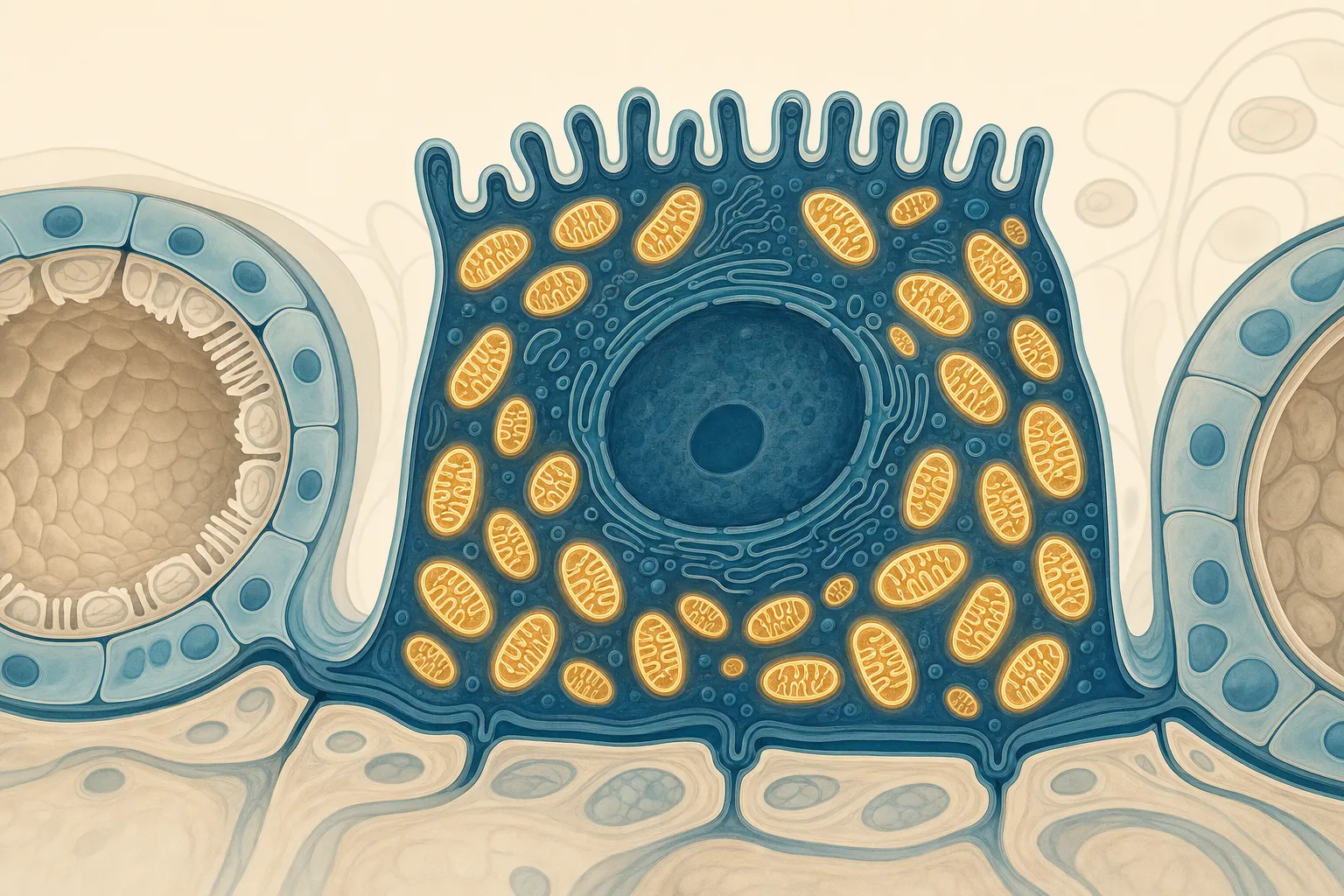
A particular group of cells does most of this heavy lifting — the proximal tubular cells. These are the cells that reclaim glucose, amino acids, and other valuable substances from your filtrate before they're lost in urine. They carry one of the highest mitochondrial densities of any cell type in the body, because that reabsorption work is metabolically expensive.
I describe it to patients this way: if your kidneys are marathon runners who never stop, mitochondria are their fuel supply. When the fuel supply falters, the whole system starts to break down.
What Mitochondria Actually Do
Mitochondria are often called the powerhouses of the cell, and the nickname is earned. They generate the large majority of the body's energy in the form of ATP — the molecule cells spend to do almost everything.
In the kidney, that ATP powers the pumps and transporters that move sodium, potassium, glucose, and water exactly where they belong. When ATP production drops, those pumps slow, cellular housekeeping suffers, and damaging byproducts accumulate.
What Goes Wrong: Mitochondrial Dysfunction as a Driver of Kidney Decline
Healthy mitochondria do their job quietly. Damaged ones do the opposite — they leak, they misfire, and they generate oxidative stress that injures the very cells they're meant to power. Research increasingly points to this process as a contributor to how chronic kidney disease progresses, not just a side effect of it.
Stressed Tubular Cells
Studies show that in chronic kidney disease, proximal tubular cells often display early mitochondrial depletion and dysfunction, which is associated with impaired energy metabolism, increased oxidative stress, and cell injury (Saxena et al., J Cell Physiol 2019). In other words, the energy crisis may begin upstream of the lab abnormalities most patients are told to watch.
Injured Podocytes and the Filtration Barrier
Further down the filtering unit sit the podocytes — specialized cells that form part of the glomerular barrier deciding what stays in your blood and what leaves in your urine. Their mitochondria depend on careful quality control: mitophagy (clearing out damaged mitochondria) and a balance between mitochondrial fission and fusion.
When that housekeeping breaks down, podocytes can be injured and the filtration barrier can begin to leak — a pattern observed in conditions like diabetic kidney disease and focal segmental glomerulosclerosis (Liu et al., Front Cell Dev Biol 2022).
Mitochondrial DNA Damage and Kidney Aging
Mitochondria carry their own DNA, called mtDNA, separate from the DNA in the cell's nucleus. This mtDNA is more vulnerable to damage because it lacks some of the protective and repair mechanisms that shield nuclear DNA.
Lower mtDNA copy numbers and certain mtDNA variants have been associated with CKD progression, and researchers are studying mtDNA levels in blood and urine as possible markers of kidney injury (Feng et al., Int J Mol Sci 2022). This is one reason I think of kidney aging as something we may be able to influence, rather than a fixed sentence.
The NAD+ Decline
NAD+ (nicotinamide adenine dinucleotide) is a coenzyme every cell needs for mitochondrial function and energy production. In both acute and chronic kidney injury, NAD+ levels are often reduced, which can further impair mitochondrial function and leave cells more vulnerable.
Some of the most interesting work here connects a master regulator of mitochondrial biogenesis, PGC-1α, to NAD+ production and kidney protection (Tran et al., Nature 2016; Ralto et al., Nat Rev Nephrol 2020). It's a promising area — but most of it remains laboratory and early clinical science, not settled treatment.
A Case From My Practice
A patient in her early 40s came to me with gradually declining kidney function. Her conventional labs showed rising creatinine and protein in the urine, but no one could explain why. More detailed functional testing pointed toward significant mitochondrial stress.
Over about six months, we built a plan to support her mitochondrial health alongside her standard care — and her kidney function stabilized, with modest improvement in some markers.
I share that story carefully. One person's result is not a promise, and outcomes like this are not typical — some patients improve meaningfully, others see only small changes, and a few continue to decline despite our best efforts. What the case illustrates is not a cure, but a question worth asking: is there an unaddressed energy problem underneath the lab values?
What the Research Is Testing: Mitochondria-Targeted Therapies
One of the more exciting frontiers in nephrology research is a class of compounds designed to reach mitochondria directly and protect kidney tissue.
The mitochondria-targeting peptide SS-31 (elamipretide) has reduced kidney injury and inflammation in preclinical models (Zhu et al., Oxid Med Cell Longev 2022). The mitochondria-targeted antioxidant MitoQ has shown renoprotection in experimental diabetic kidney disease (Ward et al., Sci Rep 2017).
I want to be clear about what these findings are and aren't: they are largely experimental and investigational. They are not FDA-approved kidney treatments, and they are not something to seek out on your own. I mention them because they show, at a mechanistic level, that protecting mitochondria can protect kidneys — which is the principle behind the safer, foundational strategies below.
Nutrients and Compounds Studied for Mitochondrial Support
This is where caution matters most. With reduced kidney function, the rules change: supplements can accumulate, interact with medications, or carry contaminants that healthy kidneys would clear. Nothing in this section is a recommendation for you specifically — it's a map of what the research touches, to discuss with your own clinician.
- CoQ10 (Coenzyme Q10) — essential to the electron transport chain that makes ATP. Some medications, including statins, can lower CoQ10, which is part of why it's studied in patients on multiple drugs.
- NAD+ precursors (such as nicotinamide riboside) — studied for supporting the NAD+ salvage pathway. The kidney data is still early and mostly preclinical; this is not an established therapy.
- Magnesium and B vitamins (especially B2 and B3) — cofactors for many mitochondrial reactions. Magnesium in particular requires care in CKD, because advanced kidney disease can also cause too much magnesium.
- Alpha-lipoic acid and L-carnitine — involved in mitochondrial energy metabolism.
- Plant polyphenols — compounds like curcumin, resveratrol, berberine, and green-tea polyphenols have shown the ability to ease renal oxidative stress and support mitochondrial dynamics in laboratory studies (Rahman et al., Front Pharmacol 2022). Berberine in particular can interact with common medications, so it isn't a casual addition.
If any of these are considered for you, the form, dose, product quality, and lab monitoring all matter — and third-party-tested products are non-negotiable when kidney function is reduced.

Lifestyle: The Most Underrated Mitochondrial Medicine
It's tempting to make this all about supplements. In reality, the most powerful levers for mitochondrial health are behaviors, and they're available to everyone:
- Regular movement stimulates the body to build new mitochondria (a process called mitochondrial biogenesis).
- Quality sleep is when much of the cellular repair happens.
- Stress management reduces the oxidative load that wears mitochondria down.
- Reducing exposure to environmental toxins protects mitochondrial function over time.
- Intermittent fasting can trigger mitophagy and mitochondrial renewal — but this one comes with a real caveat. Fasting is not appropriate for everyone with kidney disease, especially patients with diabetes, those on certain medications, or anyone underweight or malnourished. Don't start it without medical guidance.
The Safety Conversation: Why This Has to Be Personalized
I'll repeat the thread that runs through everything above: kidney disease changes the safety math. A supplement or strategy that helps a healthy person may be useless — or harmful — in advanced CKD.
That's exactly why I look beyond the standard panel in my practice, and why I'd encourage you to work with a clinician who's willing to do the same. Reasonable questions to bring to your own appointment include whether functional testing of mitochondrial or metabolic function makes sense for you, and whether any of the foundational strategies here fit your stage, labs, and medication list.
Three Key Takeaways
1. Kidneys Are Energy-Intensive, So Energy Failure Hits Them Early
Because tubular cells and podocytes depend so heavily on mitochondria, mitochondrial dysfunction can be an early, often-missed contributor to kidney decline — not just a downstream consequence.
2. Protecting Mitochondria Is a Plausible Way to Protect Kidneys
From mtDNA and NAD+ biology to experimental mitochondria-targeted compounds, the research consistently points the same direction. The proven, accessible version of this lives in nutrition, movement, sleep, and stress — not in a single pill.
3. In CKD, Personalization Is Everything
Supplements that support mitochondria in the general population can accumulate or interact dangerously when kidneys can't clear them. The right plan depends on your stage, labs, and medications, and belongs in a supervised setting.
Conclusion: Treating the Engine, Not Just the Dashboard
Chronic kidney disease is rarely lost to one dramatic event. More often it's lost slowly, to small, unaddressed stresses that compound over years. A faltering cellular energy supply is one of those stresses — quiet, measurable in the right setting, and frequently overlooked.
Understanding the mitochondrial side of kidney health doesn't replace good conventional care. It deepens it. When you support the engine instead of only watching the dashboard, every other part of the plan has a better chance to work.
If you've been told your decline is unexplained, it may be worth asking whether anyone has looked at your kidneys' energy supply at all.
🩺 Want a workup that looks beyond the standard panel? Book a comprehensive kidney consultation with Dr. Bismah Irfan →
This article is for educational purposes only and is not medical advice. It does not diagnose, treat, or cure any condition. Supplements and lifestyle changes in chronic kidney disease require individualized evaluation — always consult your physician before starting anything new, especially with reduced kidney function. Never stop or change prescribed medication without your doctor's guidance.
Selected References
- Saxena S, Mathur A, Kakkar P. Critical Role of Mitochondrial Dysfunction and Impaired Mitophagy in Diabetic Nephropathy. J Cell Physiol. 2019. https://doi.org/10.1002/jcp.28712
- Liu S, Yuan Y, Xue Y, et al. Podocyte Injury in Diabetic Kidney Disease: A Focus on Mitochondrial Dysfunction. Front Cell Dev Biol. 2022. https://doi.org/10.3389/fcell.2022.832887
- Feng J, Chen Z, Liang W, et al. Roles of Mitochondrial DNA Damage in Kidney Diseases: A New Biomarker. Int J Mol Sci. 2022. https://doi.org/10.3390/ijms232315166
- Tran MT, Zsengeller ZK, Berg AH, et al. PGC1α Drives NAD Biosynthesis Linking Oxidative Metabolism to Renal Protection. Nature. 2016. https://doi.org/10.1038/nature17184
- Ralto KM, Rhee EP, Parikh SM. NAD Homeostasis in Renal Health and Disease. Nat Rev Nephrol. 2020. https://doi.org/10.1038/s41581-019-0216-6
- Zhu Y, Luo M, Bai X, et al. SS-31, a Mitochondria-Targeting Peptide, Ameliorates Kidney Disease. Oxid Med Cell Longev. 2022. https://doi.org/10.1155/2022/1295509
- Ward MS, Flemming NB, Gallo LA, et al. Targeted Mitochondrial Therapy Using MitoQ ... in Diabetes. Sci Rep. 2017. https://doi.org/10.1038/s41598-017-15589-x
- Rahman MA, Akter S, Dorotea D, et al. Renoprotective Potentials of Small Molecule Natural Products Targeting Mitochondrial Dysfunction. Front Pharmacol. 2022. https://doi.org/10.3389/fphar.2022.925993